
Most people picture Lisbon in summer: packed trams, queues at the viewpoints, heat bouncing off the cobblestones. November is a different city. The light turns soft and low, the crowds thin out, and the places locals actually use — the cafés, the small restaurants, the fado houses — have room for you again.
If you've been putting off Lisbon because it felt too busy, this is the month to go.
The light does half the work
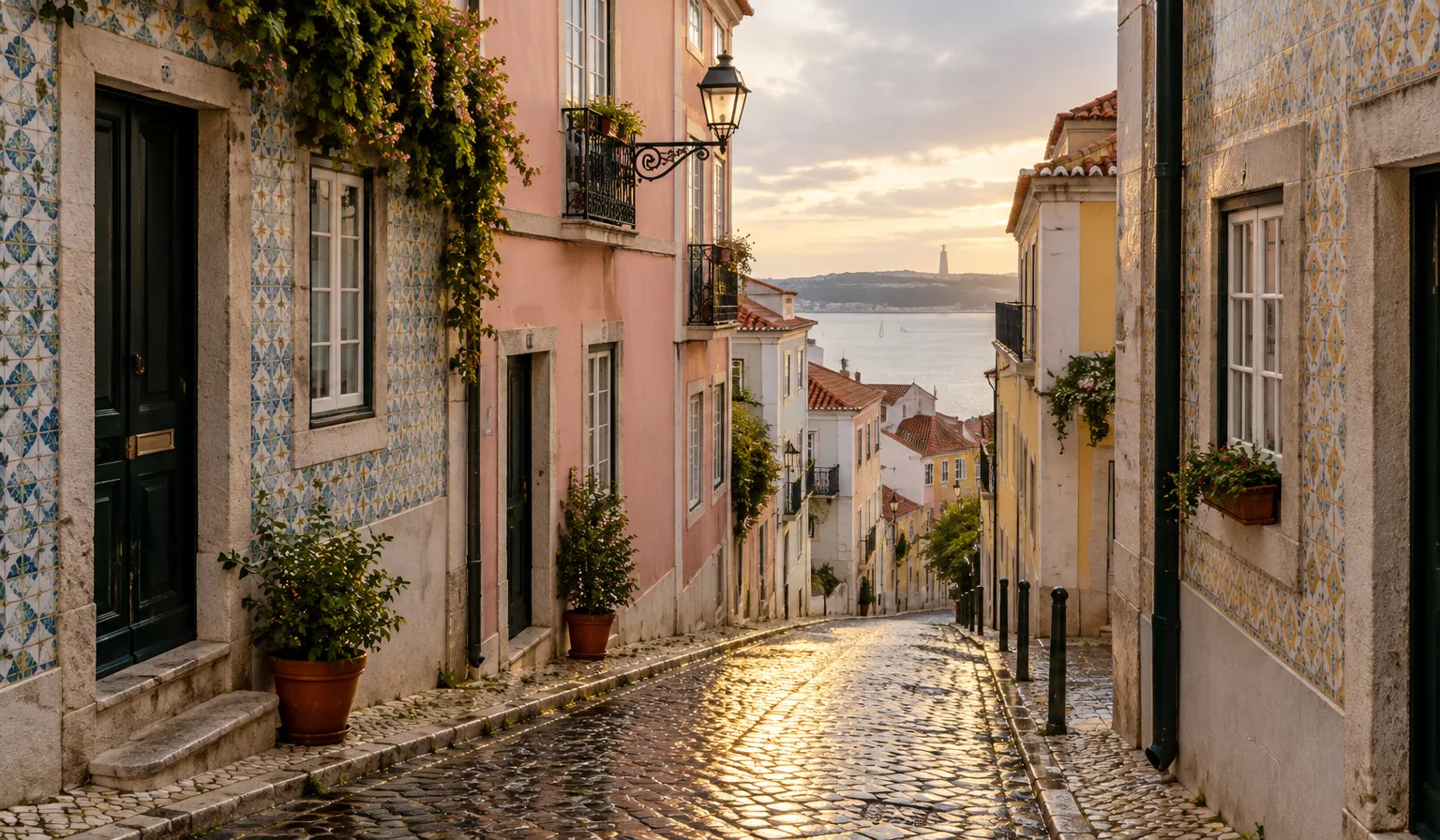
Lisbon is built on hills facing the Tejo, and in November the sun sits lower in the sky for most of the day. That means long golden hours, pastel façades that look painted, and miradouros — the city's public viewpoints — that are genuinely pleasant to linger at instead of elbow-to-elbow photo stops.
Miradouro da Senhora do Monte and Miradouro de Santa Catarina are both worth the climb. In November you can actually sit down.
Yes, it rains. Lisbon's rain tends to arrive in bursts rather than settle in for the day, and the city is unusually good at absorbing a wet afternoon. More on that below.
Three neighbourhoods that suit the season
Alfama and Graça. The oldest part of the city, a tangle of steep lanes between the castle and the river. In summer it can feel like a corridor of tour groups; in November it goes back to being a neighbourhood. Laundry on the lines, radios through open windows, small tascas serving lunch to people who live upstairs. Walk without a plan — getting mildly lost here is the point.
Mouraria. Just downhill from the castle on the other side, Mouraria is one of Lisbon's most layered quarters — the traditional birthplace of fado and today one of its most multicultural areas. It's dense, lived-in, and full of small places to eat that don't translate their menus. November's quieter streets make it easier to take in.
Campo de Ourique. A flat (rare in Lisbon), residential grid west of the centre that most visitors skip. It has a covered market, proper bakeries, bookshops, and the everyday rhythm of a city going about its business. If the hills and the rain have worn you down, spend a slow morning here.
Rainy-day Lisbon is its own itinerary
A wet afternoon in Lisbon is not a lost afternoon.
- Cafés and pastelarias. Order a pastel de nata warm, with cinnamon, and a bica (espresso) alongside. Every neighbourhood has its own favoured counter, and November is when you can get a seat at it.
- Fado. Evenings get dark early, which suits fado perfectly. The small houses of Alfama and Mouraria are where the music belongs — melancholy, candlelit, and better in a half-empty room than a packed one. Many places expect you to eat while you listen, so arrive hungry.
- Azulejos and arcades. Lisbon's tiled façades, covered galleries and old shopfronts reward slow, umbrella-in-hand wandering. When the rain stops, the wet calçada catches the light and the whole city briefly turns to glass.
One practical tip
Bring shoes with real grip. Lisbon's famous calçada portuguesa — the white limestone cobblestones — becomes slick when wet, and the city's hills turn polished stone into a hazard. Smooth-soled shoes are the single most common November mistake. Treads matter more than style here.
Before you go
A few small things make a November trip smoother:
- Pack layers and a compact umbrella rather than a heavy coat. Days can swing from mild sun to sudden rain and back.
- Download an offline map of the city before you leave the hotel. The old quarters are mazes, and that's part of their charm — until your battery is low.
- Sort your mobile data before you fly. Install an eSIM at home and you land connected, with no SIM shop detour — see Openline's Portugal page for options. If Lisbon is one stop on a longer trip, an Openline EU plan keeps working as you cross borders, and the installation guide walks through setup in a few minutes.
The takeaway
November strips Lisbon back to what it actually is: a hilly, tiled, river-facing city that's at its best when you have space to move slowly through it. Softer light, shorter queues, warm pastries, sad songs in small rooms. Pack grippy shoes and go.